User-agent: * Allow: / Trip to Italy April 2007: Rome
Showing posts with label Rome. Show all posts

Friday, 15 June 2007

OUR TRIP TO ITALY APRIL 2007 -ROME- ST PETER IN CHAINS, PANTHEON

Next Morning we travel to see other buildings in Rome.
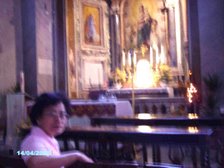
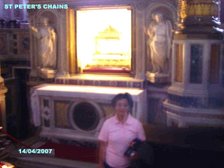
Most notable were the Basilica of ST Peter in Chains where the chains binding St Peter after his capture by the Romans were kept.
Saint Peter in Chains is a basilica in Rome, best known for housing Michelangelo's statue Moses.The interior has a nave and two aisles, with three apses divided by antique Doric-style columns. The aisles are surmounted by cross-vaults, while the nave has an 18th century lacunar ceiling, frescoed in the center by Giovanni Battista Parodi, portraying the Miracle of the Chains (1706).
Michelangelo's Moses (completed 1515), while originally intended as part of a massive 47-statue, free-standing funeral monument for Pope Julius II, became the centerpiece of the Pope's funeral monument and tomb in this, his family's church. Moses is depicted with horns, as opposed to "the radiance of the Lord", due to the similarity in the Latin between the word for "beams of light" and "horns".
Other art works include two canvas of Saint Augustine and St. Margret by Guercino, the monument of cardinal Girolamo Agucchi designed by Domenichino (also author of a sacristy fresco depicting the Liberation of St. Peter (1604). The altarpiece of the basilica contains the chains used to bind Peter during his capture by the Romans.

After the basilica of ST Peter in chains, we travel to see the Pantheon, one of the oldest building in Rome which houses the dieties of Ancient Rome and was later given to the Pope Boniface IV who then renamed it the church of ST Mary and all the Martyr Saints. Here we can see two religions with their religious symbols in one church, hence the name Pantheon or Temple of the Gods.
The Pantheon ( meaning "Temple of all the Gods") is a building in Rome which was originally built as a temple to the seven deities of the seven planets in the state religion of Ancient Rome. It is the best preserved of all Roman buildings, and perhaps the best preserved building of its age in the world. It has been in continuous use throughout its history. Although the identity of the Pantheon's primary architect remains uncertain, it is largely assigned to Apollodorus of Damascus. Since the 7th century, the Pantheon has been used as a Christian church.In 609 the Byzantine emperor Phocas gave the building to Pope Boniface IV, who reconsecrated it as a Christian church titled Santa Maria ad Martyres (in English the Church of Mary and all the Martyr Saints).

Lastly before we left Rome and its historical buildings and heritage, we also indulged in some of the best delicacies provided by Rome. The ' best ice cream' in Rome comes with at least 50 over flavours. It was a particularly hot day so we enjoyed an ohur of rest quenching our thirst with ice cream.

Friday, 25 May 2007

Welcome to Our Tour Of Italy April 2007

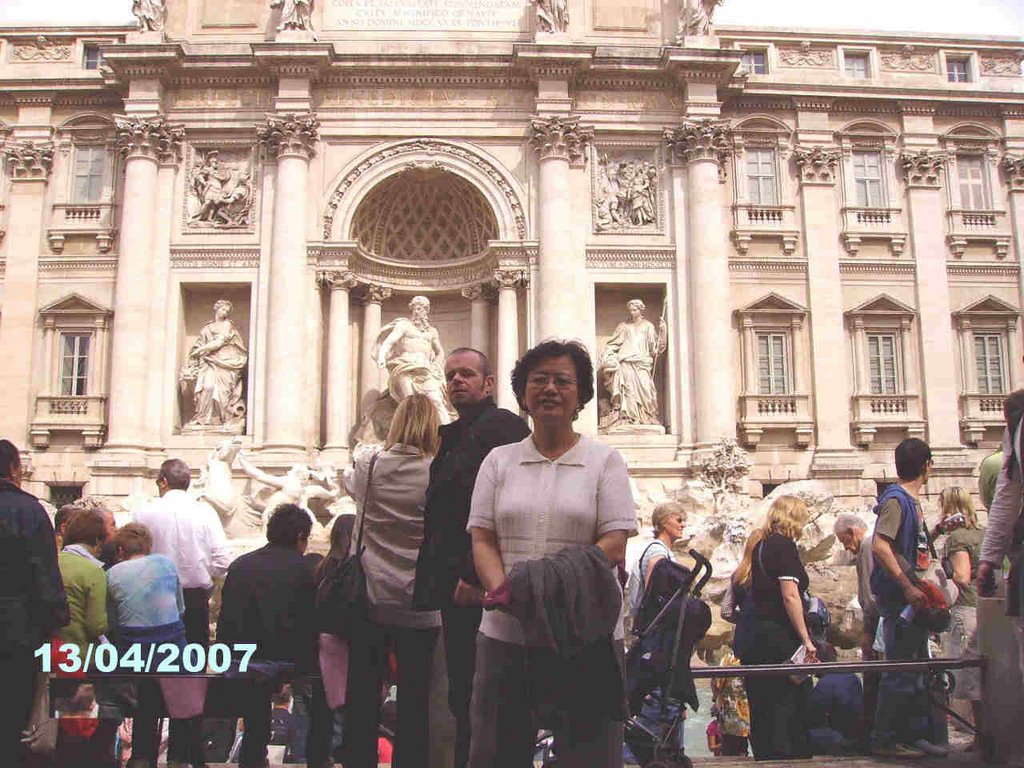
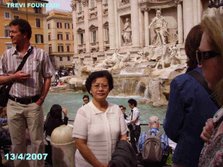
Next on our tour was the beautiful Trevis Fountain of Rome. The Trevis Fountain is a fantastic work of art that is much more than a mere sculpture. The fountain is a true wonder, a jewel of water and stone that is nestled between the palaces of the historic centre of the city.
You can already hear its presence from the nearby streets. Indeed, as you get nearer the sound of its gushing waters grows constantly more intense, reaching a crescendo in the square, where you will find the most breathtaking sight.

Even the palace in the background blends perfectly with the composition and the game of space and mass gives an air of movement to the entire statue. The central feature of the monument is a chariot in the shape of a shell, drawn by seahorses with Triton as their guide. Before the enormous central niche stands Neptune. To the side are the statues of Abundance and Salubrity. All around, natural and artificial forms merge together in a representation of rocks and petrified vegetation that run along the foundation of the palace and around the borders of the pool, which represents the sea.

This unique statue goes back to Roman times and it was the terminal point of the Aqua Virgo aqueduct commissioned by Augustus, which was used to provide water for the thermal baths.

The aqueduct continued to function, even though it was necessary to wait until the eighteenth century when Pope Clement XII decided to restore the Trevi district and began work on the fountain we know today. It took three centuries to complete and is often attributed to Bernini, but for the most part it is the work of the Roman architect, Nicola Salvi, who took twenty years to complete it.

This work of art is so famous that even that there was a 1954 movie made around it called "Three Coins in the fountain". There is also another curious tradition regarding the Trevi Fountain. It is said that if you throw a coin over your shoulder into the water, you will be sure to return to Rome.

We spend almost an hour marveling at the beauty of the statues and the clear water flowing from the fountain.
Nearby there was a wonderful shop which sell some of the most delicious ice creams with at least 30 flavours.

Wednesday, 23 May 2007

Welcome to Our Vacation Trip to Italy April 2007


Add Image

  • "When in Rome, do as the Romans do!"

    Italy is a beautiful country. A place of olive oil, pasta, wine, mafia and sunshine, roman ruins and renaissance palaces, Italy has a lot to give its tourists.

    Italy is a country full of interesting things for the casual tourist and the educated tourist, it has deep Roman Catholic roots. The Vatican is a small country by itself in Italy.

    That is why my wife and I decided to visit Italy for the first time. We arrived in Rome's Leonardo Da Vinci airport after an exhausting journey of 12 hours on Singapore Airlines. Immigration officers were pleasant and friendly.They do not talk much and stamped your passport after a check with their computers. Then there was the retrieval of our luggage.

    We boarded a tour bus going to the main central district of Rome. Along the way were many Olive and Grape farms. In Rome most of the streets were narrow and cobbled , a remnant of the original passage ways for horses and carriages in Ancient Rome. There are many fountains and statues as well as remains of ancient Roman houses and architecture.

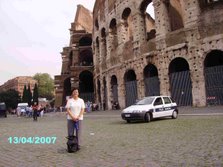
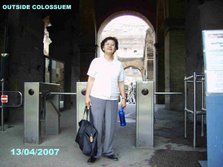
    First stop was the Coliseum, one of the last wonders of the world. It is the world largest arena of the ancient world well known for their so called sporting activities like gladiators fighting and killing of persecuted Christians. It is really impressive from the outside. However to get inside the Coliseum, the Romans has become wise to the tourist dollar and are charging entrance fees. Inside the Coliseum, the view from the top is spectacular and you can get a very good view of what's happening in the arena as well as outside the arena. There are dungeon rooms where the gladiators probably rest before and after a fight. You would definitely rate it as one of the wonders of the ancient world.

  • Next to the Coliseum, we found the the ruins of the Roman Forum the seat of ancient public life where Julius Caesar was reportedly killed by Brutus and Cassius. The roads were all cobbled as in ancient times. If you are not careful you can sprain your ankle easily.

Places Visited In Trip to Italy April 2007

Rome

-Colossuem
-Trevis Fountain


Vatican City


-Vatican Museum
-Sistine Chapel
-St Peter's Basilica
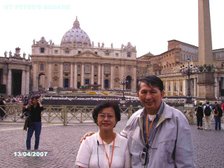
-St Peter's Square

Rome

-St Peter in chains
-Pantheon

Pompeii

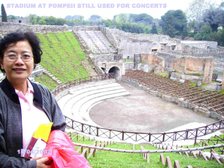
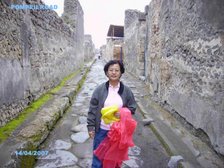
-ruins

Naples

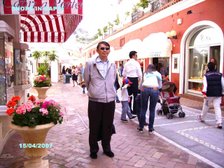
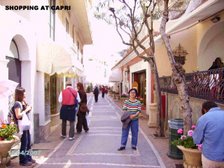
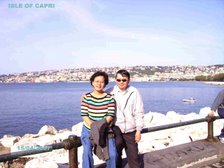
-Isle of Capri
-Sorrento
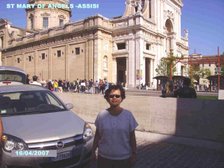
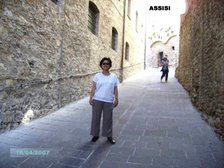
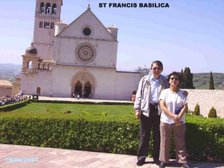
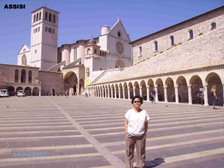
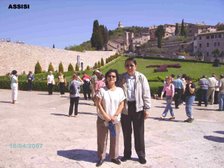
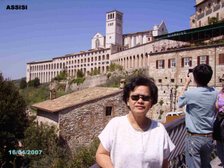
-Assisi
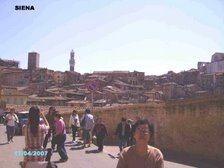
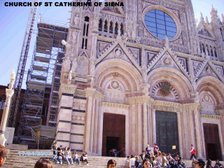
-Siena

Florence

Venice

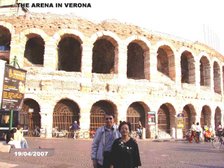
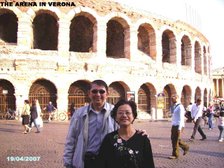
Verona

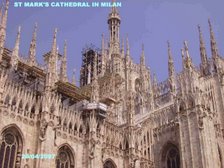
Milan

Blog Archive

About Me

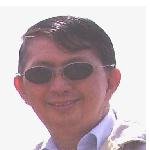
My photo
A newbie to world of internet marketing. At the age of 59 years, I am struggling to learn the ins and outs of online marketing. I am a educator,part-time healthcare worker,computer hardware hobbyist,now ebook writer and internet marketer. I am also a full time lifelong learner. Graduated in 1972, did my Masters in 1991 and doctorate in 1993.

profile

profile
profile
 
http://kenkee.blogspot.com/ 2009-01-06 monthly 0.