User-agent: * Allow: / Trip to Italy April 2007: Marco Polo
Showing posts with label Marco Polo. Show all posts

Friday, 29 June 2007

OUR TRIP TO ITALY APRIL 2007

It was our first trip to Italy.

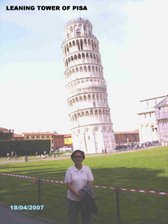
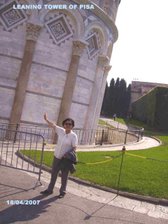
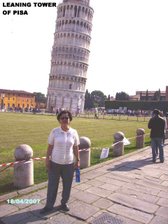
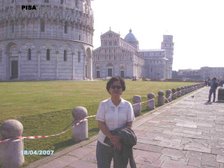
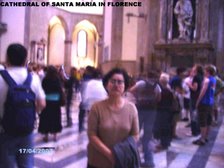
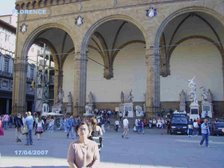
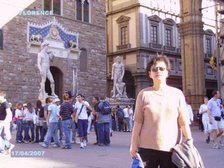
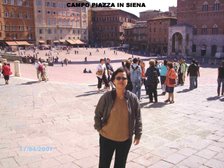
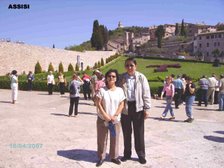
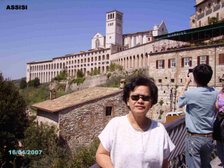
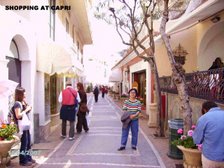
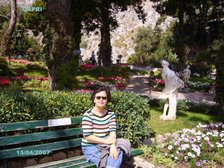
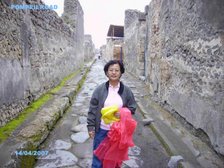
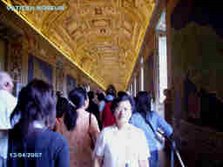
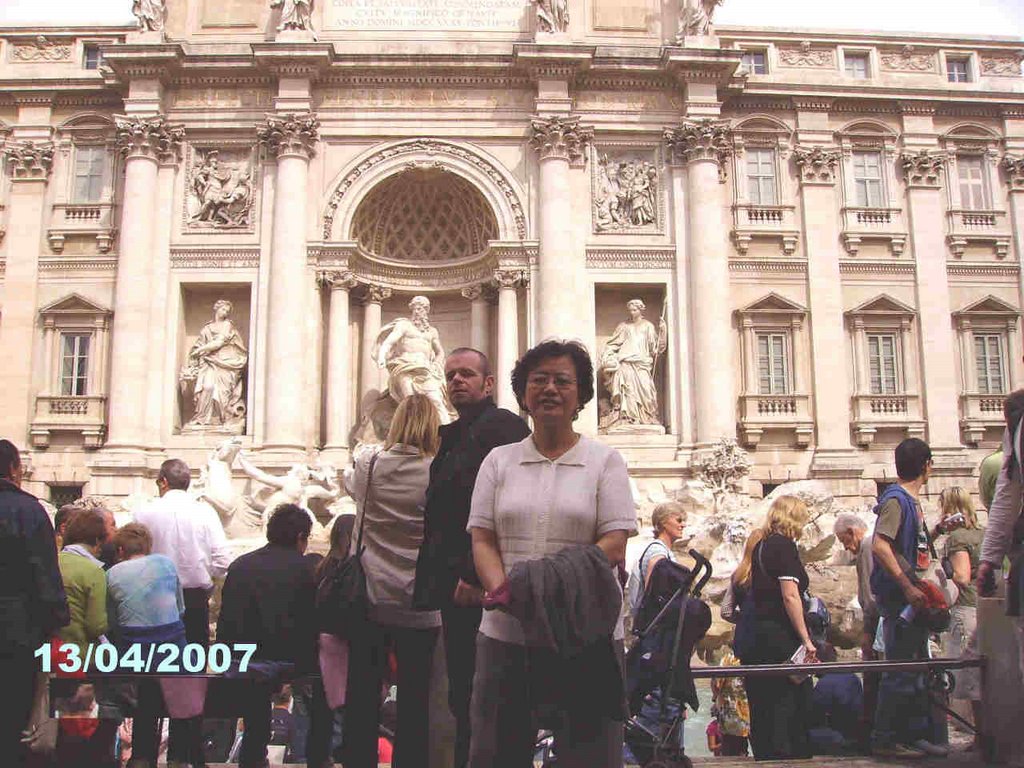
W e expected to see a lot of ancient civilisation( ROME, POMPEII), the religious center of the World (VATICAN CITY), icons of Italy (NICOLOSSEUM, LEANING TOWER OF PISA, VENICE, TREVI FOUNTAIN), wonderful statues and frescos, paintings, architecture and the culture of a country known for its history and its famous people( MICHAELANGELO, LEONARDO DA VINCI, GALILEO, ST PETER, ST FRANCIS OF ASSISSI,MARCO POLO).

All these we visited and saw the beauty of Italy.

Some advice we wished to give new visitors:

Parking for coaches are always very far from the tourist spots so be prepared to walk a lot. Try and get comfortable sport shoes.

During summer it can be very hot so buy lots of water to drink during your trip.
Water can be bought at different prices in the country. Rome and Vatican city are the most expensive with 500cc of water costing 3.50 euros while at Florence we were able to get 12 litres of water for only 0.99 euros.

The sun can also be very glaring to the eyes. We advise bringing good UV block sunglasses or wear a hat or cap.

Most of the big shops uses the major credit cards such as VISA, MASTERCARD, DINERS CLUB, AMERICAN EXPRESS but for the small stall holders selling souveniers cash is still important.

Bring sufficient cash for incidental buying of souvenier, food, icecream, even the usage of toilets etc. Remember that there are many pickpockets in Italy so keep your valuables(cash, credit cards, and passports) in a body pouch. It is safer than to lose your valuables to the pickpockets.

All services and goods carry a value added tax of 20% which can be refunded at the customs in the airport provided the amout is large enough. Get a form filled up at the shop where you buy the goods.

The hotels in Italy are generally comfortable but do not come with amenities like kettle, teabags or coffee. So if you need to boil water, bring along a travel kettle. Remember to bring the the right plug for the electical socket.
There is no airconditioning in most hotels but there are heaters for winter. Services like porters are slow so expect to receive your luggage late. It is better if you can bring the luggage up to your rooms yourselves.

Most Italians speak very little English. So try to learn a few Italian phrases.

Internet services cost about 5 euros for half an hour.

We found that there are a lot of illegal immigrants such as Africans and Asians selling fake goods along the roadside.

Once on the way to our hotel there was a blockage ot the road by the police as a result of strike by some workers working in factories. As a result the coach had to U turn and go by an alternative route.

Not all the toilets are free. Some cost 0.5 to 1 euro per entry. Best places to use a toilet would be at MacDonalds or you may be able to use a toilet at a food shop provided you buy food from them. No purchase means no usage of their toilets.

Bring sufficient batteries for your camera or bring the charger for your camera. If you don't then all the pictures which you take for your vacation will be wasted. The cost of batteries are very high in Italy.

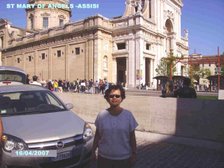
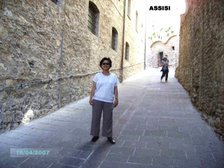
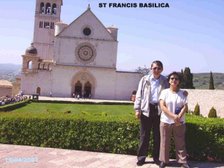
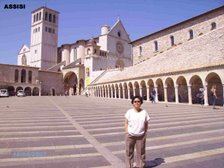
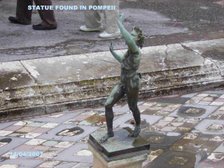
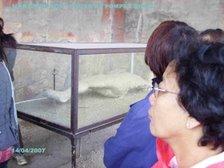
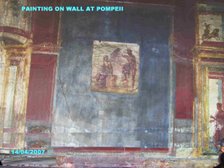
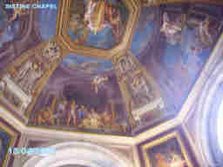
Photo taking are prohibited in many places in Italy especially where there are frescos as the flash damages the painting. Examples are Sistine Chapel, Pompeii, Assissi.

Churches or Basilica are places of worship so your dress code should be decent-no mini skirts and exposed shoulders. Silence is also important!

The largest lemon in the world can be found in Sorrento.

Finally enjoy your trip to Italy as we did with all these tips and precautions.

Thursday, 21 June 2007

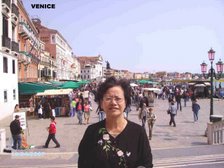
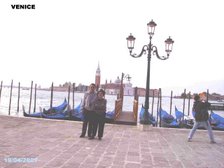
OUR TRIP TO ITALY APRIL 2007 - VENICE

Next we travel to the most romantic of Italian Cities,
Venice, the city of canals well known for its
famous inhabitant Marco Polo and Shakespeare's play" Merchant of Venice"

Venice ( Latin: Venetia) is a city in northern Italy, the capital of
region Veneto, and has a population of 271,663 (census estimate
January 1, 2004). Together with Padua (Padova), the city is included
in the Padua-Venice Metropolitan Area (population 1,600,000).
Venice's nicknames include "Queen of the Adriatic", "City of Water",
"City of Bridges", and "The City of Light".

Venice is built on one hundred and twenty two small islands, and
holds one hundred and fifty canals, connected by an amazing four
hundred and nine bridges, of which only three cross the main canal.

The area it covers is a mere 458 kilometres. Although the city
appears small, it is really quite extensive for its size. While most tour
guides don’t recommend getting lost in the majority of cities, Venice
is the place to get hopelessly lost for a day; it is certainly more
advisable than getting lost in a shopping centre and hiding out in the
frozen foods section.

However, Venice isn’t all cities and crowded
streets: through the mysterious alleyways leading off from the city,
endless mazes of backstreets and deserted squares, you'll find the
‘real’ Venice , and it's a perfect place to walk for hours on end,
pretending to know where you are.

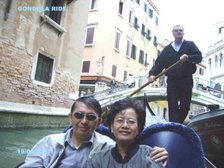
The classical Venetian boat is the gondola, although it is now
mostly used for tourists, or for weddings, funerals, or other ceremonies.
Most Venetians now travel by motorised waterbuses ("vaporetti")
which ply regular routes along the major canals and between the city's islands.
The only gondolas still in common use by Venetians are the traghetti,
foot passenger ferries crossing the Grand Canal at certain points without bridges.

The islands of the Venetian lagoon were first settled during the
barbarian invasions of the 5th and 6th centuries AD, when the people
of the Veneto mainland sought refuge in the marshy region. The
refugees built the now-famous watery villages on rafts of wooden
posts
driven into the soil, laying the foundations for the floating
palaces of today. The traditional date of Venice 's birth is given as 25
March 421, but there is little evidence to support this belief.

The famous water-villages of Venice post a threat to the historical buildings,
which are slowly sinking into the marshy ground. It is believed that
if construction work does not continue, these buildings may, in turn, pose a
threat to the safety of locals and tourists.
It has been said that “When this precious place sinks, the world will be the poorer”,
and also stated that Venice has a bleak future.

Regular buses (yes, they do exist) run from one place to another, but it's
probably the least exciting way to get around the city.
Taxis - the regular four-wheeled variety - do operate from Piazzale Roma.

It's nearly always the festive season in Venice , although the city is
particularly busy in the flourishing months of spring, especially
surrounding Easter. Accommodation is one of the most difficult
things to find around that time zone, as well as around Christmas,
New Year and festival Carnevale (in February, locals and tourists
put on masks to cover their faces). The most pleasant time of year to
visit is late March into May, with clear spring days and fewer crowds.
September is the next best in terms of weather, but October is
quieter. Flooding occurs in November and December, and winter can
be unpleasantly cold - although seeing Venice under a layer of snow
can cast the aura of a fairy tale.

Most visitors to Venice land at Marco Polo airport on the mainland,
10 km from Venice . Many of them choose the heading straight
from the city, but walking around the backstreets is really what
Venice is about.

Although it can be excruciatingly hot and stuffy in summer,
when the tourists flock, it is nonetheless one of the most romantic cities.
Like every tourist location, it’s not just tourists from the surrounding
countries who visit; all kinds of people can be found, cameras at the
ready, in Venice . The attractions in Venice include many remarkable
structures, such as an impressive array of bronze work, glass factories,
tapestries and paintings from the 5 th to 6 th century, as well as a whole
handful of amazing buildings and galleries showcasing the artistic
side of Venice .

If you are looking for the upbeat bars and restaurants, you cannot go
wrong with the area surrounding Campo di Santa Margarita in San
Polo
. There you will find an Irish pub, trendy bars and even MacDonalds.
The area is frequented by students from the University and is buzzing with
life during the weekends as market stalls of fish and vegetables open.

St. Mark's Square in Venice.
These Horses of Saint Mark are a replica of the Triumphal Quadriga
captured in Constantinople in 1204 and carried to Venice as a trophy.
The Republic of Venice seized the eastern shores of the Adriatic
before 1200, mostly for commercial reasons, because pirates based
there were a menace to trade. Situated on the Adriatic Sea, Venice
traded with the Byzantine Empire and the Muslim world extensively.
During the late thirteenth century, Venice was the most prosperous city
in all of Europe. Venice remained a republic throughout its independent period and
politics and the military were kept completely separate.Venice began to lose its position as a center of international trade during the later part of the Renaissance as Portugal became Europe's principal intermediary in the trade with the East, striking at the very
foundation of Venice's great wealth.
After 1070 years, the Republic lost its independence when Napoleon
Bonaparte on May 12, 1797, conquered Venice during the First Coalition.
It was during the Settecento (1700s) that Venice became perhaps the most elegant and refined city in Europe, greatly influencing art, architecture, and literature.
Venice became Austrian territory when Napoleon signed the Treaty of
Campo Formio
on October 12, 1797. In 1848-1849 a revolt briefly reestablished
the Venetian Republic. In 1866, following the Seven Weeks War,
Venice, along with the rest of Venetia, became part of Italy.

The Ponte dei Sospiri, the Bridge of Sighs.
Venice is world-famous for its canals. It is built on an archipelago of
122 islands formed by about 150 canals in a shallow lagoon. The
islands on which the city is built are connected by about 400 bridges.
In the old center, the canals serve the function of roads, and every
form of transport is on water or on foot.

The sestieri are the 6 primary traditional divisions of Venice. The city
is divided into the six districts of Cannaregio, San Polo, Dorsoduro
(including the Giudecca), Santa Croce, San Marco (including San
Giorgio Maggiore), and Castello (including San Pietro di Castello and
Sant'Elena). At the front of the Gondolas that work in the city there is
a large piece of metal intended as a likeness of the Doge's hat. On
this sit six notches pointing forwards and one pointing backwards.
Each of these represent one of the Sestieri (the one which points
backwards represents Giudecca).

Places Visited In Trip to Italy April 2007

Rome

-Colossuem
-Trevis Fountain


Vatican City


-Vatican Museum
-Sistine Chapel
-St Peter's Basilica
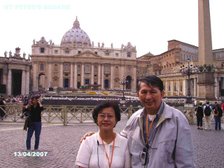
-St Peter's Square

Rome

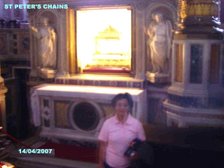
-St Peter in chains
-Pantheon

Pompeii

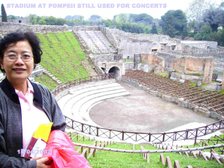
-ruins

Naples

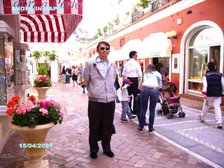
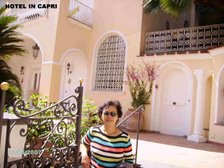
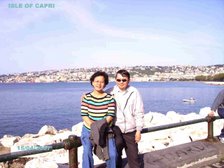
-Isle of Capri
-Sorrento
-Assisi
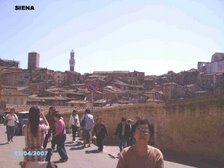
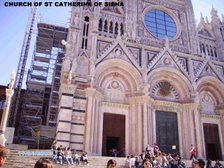
-Siena

Florence

Venice

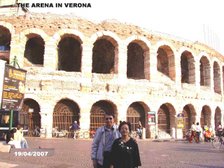
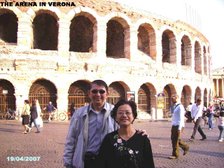
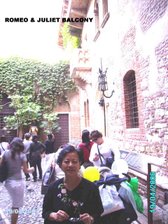
Verona

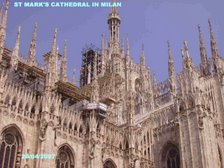
Milan

Blog Archive

About Me

My photo
A newbie to world of internet marketing. At the age of 59 years, I am struggling to learn the ins and outs of online marketing. I am a educator,part-time healthcare worker,computer hardware hobbyist,now ebook writer and internet marketer. I am also a full time lifelong learner. Graduated in 1972, did my Masters in 1991 and doctorate in 1993.

profile

profile
profile
 
http://kenkee.blogspot.com/ 2009-01-06 monthly 0.